

Few experiences combine Himalayan scenery, rushing water, and adventure quite like river rafting in Rishikesh. Set along the Ganga and surrounded by the foothills of the Himalayas, Rishikesh is one of Uttarakhand’s best-known rafting destinations. The region offers different stretches for beginners and experienced participants, with rapids ranging from Grade I to Grade IV.
Whether you are planning your first rafting trip or looking for a more challenging stretch, choosing the right route matters. Distance, rapid grade, weather, river conditions, operator standards, and your own fitness can all affect the experience.
This guide explains the main rafting stretches around Rishikesh, rapid grades, estimated prices, the best season, safety considerations, and what to check before booking.
Understanding River Rapids in Rishikesh
Whitewater rapids are commonly described using a Grade I to Grade VI classification system. In the Rishikesh area, commercial rafting routes generally include rapids from Grade I through Grade IV.
A simple overview is:
- Grade I: Gentle moving water with relatively easy passages.
- Grade II: Moderate waves and straightforward navigation.
- Grade III: Stronger and more irregular rapids requiring coordinated paddling.
- Grade IV: More powerful and technically demanding whitewater requiring experienced supervision.
- Grade V–VI: Extremely demanding whitewater and not part of normal commercial Rishikesh rafting routes.
Rapid grades should be treated as a general guide rather than a guarantee of conditions. River levels, weather and water flow can affect the experience.
Popular Rapids Around the Rishikesh Stretch
The rafting corridor includes several well-known rapids, including Three Blind Mice, The Wall, Crossfire, Roller Coaster, Return to the Sender, Double Trouble, Golf Course and Club House.
The exact experience can vary according to river conditions, so participants should always follow the instructions of their authorised rafting guide.
Main River Rafting Routes Near Rishikesh
Different starting points offer different distances and difficulty levels. The most commonly discussed stretches include Brahmpuri, Shivpuri, Marine Drive and Kaudiyala.
| Route | Approx. Distance | General Experience | Suitable For |
|---|---|---|---|
| Brahmpuri / Short Stretch | Approx. 9–12 km | Easier water and shorter outing | Beginners and families where permitted |
| Shivpuri to Rishikesh | Approx. 16 km | Mix of calmer sections and stronger rapids | First-timers and general adventure seekers |
| Marine Drive Section | Approx. 24–26 km | Longer outing with additional rapids | Visitors looking for a longer experience |
| Kaudiyala to Rishikesh | Approx. 36 km | Long and demanding Grade III–IV section | Experienced participants with appropriate supervision |
Route names, distances and trip durations can vary slightly between operators depending on the exact launch and exit points.
1. Brahmpuri Rafting
Brahmpuri is generally associated with shorter and gentler rafting experiences around Rishikesh. It can be a practical choice for visitors who want to experience rafting on the Ganga without selecting one of the longer and more demanding stretches.
The exact launch and finishing points may vary, so confirm the route distance, duration and rapid level with the operator before booking.
2. Shivpuri to Rishikesh Rafting
The Shivpuri to Rishikesh rafting stretch is one of the best-known commercial routes in the area. It covers approximately 16 km and combines quieter sections of river with more active rapids.
Popular rapids associated with this stretch include Roller Coaster, Return to the Sender, Double Trouble, Golf Course and Club House.
For many visitors, Shivpuri offers a good balance between a substantial rafting experience and a manageable route length.
3. Marine Drive Rafting
Marine Drive is another well-known starting section on the rafting corridor between the upper Ganga stretches and Rishikesh.
Depending on the operator and exact launch point, the trip can cover approximately 24–26 km and include additional rapids compared with shorter stretches.
This route may be more suitable for visitors who want a longer rafting experience and are comfortable spending more time on the river.
Always confirm the exact route and current conditions before booking.
4. Kaudiyala to Rishikesh Rafting
The Kaudiyala to Rishikesh stretch is among the longest and most demanding commercial rafting experiences in the area.
The route is approximately 36 km and can take around 6–7 hours depending on river conditions, breaks and the operating plan.
The stretch includes demanding Grade III and Grade IV whitewater and is best suited to participants who are comfortable with a more physically demanding rafting experience under qualified supervision.
Estimated Rishikesh River Rafting Prices
Rafting prices in Rishikesh can vary according to route, season, operator, transportation, group size, equipment and other inclusions.
The following figures should therefore be treated as estimated/indicative price ranges, not fixed official rates:
| Route | Estimated Price Per Person |
|---|---|
| Brahmpuri (9–12 km) | ₹600 – ₹800 |
| Shivpuri (16 km) | ₹1,000 – ₹1,500 |
| Marine Drive (24–26 km) | ₹1,500 – ₹2,200 |
| Kaudiyala (36 km) | ₹2,500 – ₹3,500 |
Note: These are estimated prices only and may change depending on the season, operator, group size, transportation, availability and inclusions. Always confirm the latest price directly with the rafting operator before booking.
Do not choose a rafting trip only because it is the cheapest. Check the operator, route, equipment, guide experience and safety arrangements as well.
River Rafting Safety Tips
River rafting is an adventure activity and river conditions can change quickly. Choosing an authorised operator and following the guide’s instructions are among the most important safety measures.
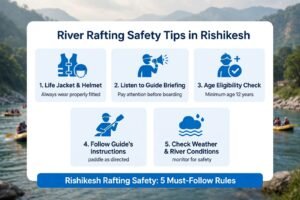
1. Wear the Required Safety Equipment
Use the life jacket and helmet provided or approved by the rafting operator. Make sure the equipment is fitted correctly before entering the river.
2. Pay Attention to the Safety Briefing
Guides explain the commands and procedures participants need to know before entering the water. Listen carefully and ask questions if anything is unclear.
3. Follow Age and Eligibility Rules
Different routes and operators may have specific eligibility requirements. Confirm the latest rules before booking.
4. Follow the Guide’s Instructions
Water conditions may change even on the same route. Follow the guide’s instructions during launching, paddling, stopping and exiting the river.
5. Check Current River Conditions
Weather, rainfall, river levels and local restrictions can affect rafting availability. Confirm current operating conditions before your trip.
What Is the Best Time for River Rafting in Rishikesh?
Uttarakhand Tourism lists the rafting season as September to June, although actual operating conditions can vary with weather and local restrictions.
September to November
The post-monsoon period is a popular time to visit because the rafting season has reopened and the surrounding weather is generally suitable for outdoor activities.
December to February
Winter brings cooler temperatures, particularly around the river. Visitors should be prepared for colder conditions.
March to June
Spring and early summer are also popular months for rafting, with warmer daytime temperatures making water-based activities attractive.
July and August
The monsoon period brings heavier rainfall and changing river conditions. Commercial rafting availability may be restricted during this period, so always check the latest local operating status before travelling.
What to Wear for River Rafting in Rishikesh
Choose comfortable clothing that is suitable for getting wet and allows easy movement.
Recommended basics include:
- Quick-drying sportswear or synthetic clothing
- Secure footwear suitable for wet conditions
- A properly fitted life jacket and helmet supplied by the operator
- Sun protection
- A waterproof storage arrangement for essential belongings
Avoid taking unnecessary valuables onto the river. Ask the operator about safe arrangements for phones, wallets, keys and other personal belongings.
Age Requirements for Rafting in Uttarakhand
Age requirements are an important part of planning a rafting trip.
The applicable Uttarakhand rafting rules should be checked before booking because eligibility can depend on the current regulations and the route being operated.
The Uttarakhand Tourism rafting rules include age-related restrictions, so participants should confirm the latest requirement with an authorised operator before travelling.
Can Non-Swimmers Go River Rafting in Rishikesh?
Some rafting stretches around Rishikesh are accessible to beginners and non-swimmers, but suitability depends on the route, river conditions, age, fitness and operator requirements.
Non-swimmers should tell the rafting operator before booking so they can recommend an appropriate route and explain the relevant safety procedures.
A participant should never assume that every rafting stretch is equally suitable simply because they have been able to join a shorter route before.
How to Choose a Rafting Operator
Before booking river rafting in Rishikesh, check the following:
- Whether the operator is authorised or properly registered
- The exact route and starting point
- The approximate distance and duration
- What safety equipment is included
- Whether transportation to the launch point is included
- Current river and weather conditions
- The guide’s experience and qualifications
- The operator’s safety procedures
- The total price and what it includes
Comparing operators on these factors can help you avoid choosing a trip solely on the basis of price.
Final Thoughts
River rafting in Rishikesh offers a wide range of experiences, from shorter and relatively gentle stretches to demanding Grade III and Grade IV whitewater.
Shivpuri is one of the most popular options for visitors looking for a medium-distance adventure, while Kaudiyala offers a longer and more demanding experience.
The best rafting trip isn’t necessarily the longest or most challenging one. Choose a route that matches your experience and fitness, use a reliable and authorised operator, follow the applicable safety instructions, and check the latest river and weather conditions before setting out.
With the right preparation, rafting can be an exciting way to experience the Ganga and the Himalayan landscape while respecting the river and the environment.