
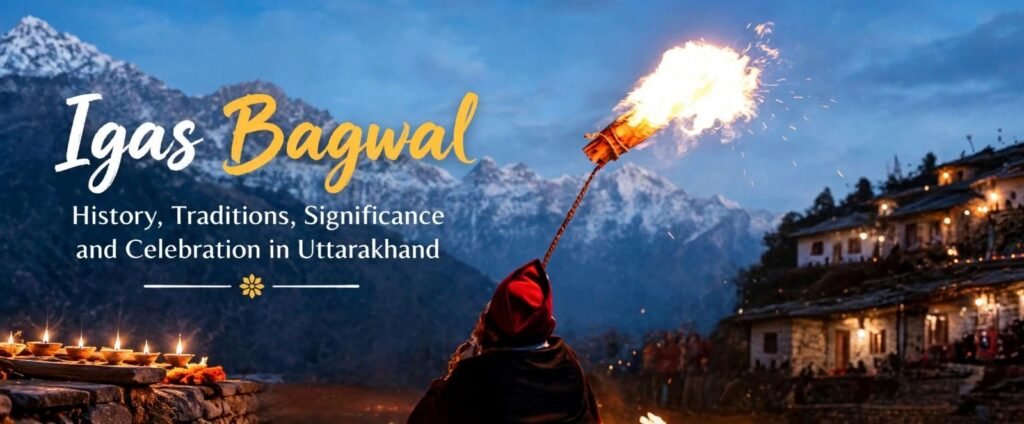
Igas Bagwal is a traditional festival celebrated in Uttarakhand, especially in the Garhwal region. Also known as Igas or Budhi Diwali, the festival reflects the cultural heritage, folk traditions and community spirit of the Himalayan region. Families come together to light lamps, prepare traditional food, worship livestock, sing folk songs and celebrate with their loved ones.
Although the main Diwali celebration takes place earlier, Igas Bagwal brings another festive moment to the hills. Its stories, customs and celebrations have been passed down through generations, with local variations from village to village.
When Is Igas Bagwal in 2026?
In 2026, Igas Bagwal is expected to be celebrated on Friday, 20 November, according to several published calendars. Since the festival follows the Hindu lunar calendar and some calendars differ, it is advisable to confirm the observance with a trusted local Panchang or community elders.
What Is Igas Bagwal?
Igas Bagwal is a traditional Pahadi festival associated mainly with Garhwal and also observed in some parts of Kumaon. The word Bagwal is associated with the celebration of Diwali, while Igas refers to the festival observed in the hills after the main Diwali festivities.
For many families, Igas is more than another festival. It is a time to reconnect with their roots, meet relatives, share food and keep regional customs alive. Even people living outside Uttarakhand may celebrate it with family gatherings, traditional dishes and Garhwali folk music.
The way Igas is celebrated can vary depending on local customs and family traditions. This diversity is an important part of Uttarakhand’s cultural identity.
History and Folklore Behind Igas Bagwal
There are popular folk stories explaining why Igas Bagwal is celebrated after the main Diwali. These stories are part of local oral tradition and are not all established historical accounts.
The Story of Lord Rama’s Return
According to one popular belief, the news of Lord Rama’s return to Ayodhya after defeating Ravana reached remote Himalayan villages later than it reached other places. When people heard the news, they celebrated by lighting lamps and rejoicing.
In this telling, the delayed celebration became associated with the tradition of Igas Bagwal. The story connects the festival with the broader cultural and religious significance of Diwali.
The Story of Madho Singh Bhandari
Another well-known story connects Igas with the Garhwali military commander Madho Singh Bhandari and his soldiers. According to local folklore, the soldiers were away on a military campaign during Diwali and returned home later. Their return was celebrated by the villagers, creating a tradition of celebrating Diwali again.
These accounts help explain how people understand the festival today. However, the details vary across retellings, so they are best presented as folklore rather than confirmed historical fact.
Why Is Igas Bagwal Celebrated After Diwali?
Igas Bagwal is traditionally associated with the period following the main Diwali celebration. Its connection with the lunar calendar and local folklore has helped preserve this distinctive festive tradition in Uttarakhand.
The festival is also an occasion to appreciate family, community and the relationship between people and their surroundings. In rural areas, livestock have traditionally played an important role in agriculture and daily life, which is why caring for and honouring animals can form part of the celebration.
For people living away from their ancestral villages, Igas can also be a way to maintain a connection with Garhwali culture and pass local traditions on to younger generations.
How Is Igas Bagwal Celebrated in Garhwal?
Igas celebrations differ between villages and families, but several customs are commonly associated with the festival.
1. Lighting Lamps
Families light traditional lamps around their homes and courtyards. The lights create a festive atmosphere and symbolise hope, positivity and the continuation of cultural traditions.
2. Worshipping Livestock
In some villages, cattle are bathed, decorated and worshipped as part of the celebration. This custom reflects the traditional importance of livestock in mountain life and agriculture.
3. Singing and Dancing
Folk songs, music and community gatherings are important parts of many Igas celebrations. People may gather in courtyards or open spaces to enjoy traditional music and dance.
4. Meeting Family and Neighbours
Igas gives families and neighbours an opportunity to come together, share food and celebrate. These gatherings help strengthen community bonds and keep local customs alive.
Bhailo: A Distinctive Folk Tradition
Bhailo is one of the well-known traditions associated with Igas Bagwal in parts of Uttarakhand. However, local practices are not identical everywhere.
In my village, Bhailo is celebrated not only during Igas Bagwal but also during Diwali. This is an example of how traditions can vary from one village to another.
In our local tradition, Bhailo is prepared using chhilka collected from pine trees, locally known as cheed. The material is bundled together to make a torch-like arrangement. It is tied with a forest vine that we locally call rachhi (रच्छी). The chhilka has a distinctive appearance and can continue burning for a while.
When the Bhailo is lit, people swing it around as part of the traditional celebration. The movement and glow of the burning bundle create a memorable sight against the evening sky.
This description reflects the practice in our village; the materials and methods may differ elsewhere. Because Bhailo involves fire, it should only be handled by experienced adults in a suitable open area, away from people, buildings, trees and dry vegetation.
The tradition is a reminder that Uttarakhand’s cultural heritage is preserved not only through well-known festivals but also through local knowledge, regional words and customs passed down within families.
Traditional Food During Igas Bagwal
Food is an important part of festive gatherings in Uttarakhand. Families may prepare puri, pakode, sweets and other traditional dishes to share with relatives and neighbours.
The menu varies according to the village, season, family preferences and ingredients available locally. In many households, preparing and sharing food is as important as the rituals themselves.
A shared meal gives family members an opportunity to spend time together and welcome visitors. These simple gatherings help preserve the warmth and community spirit associated with Igas Bagwal.
Cultural Significance of Igas Bagwal
Igas Bagwal represents the living cultural heritage of Uttarakhand. Its significance can be understood through several aspects:
- Preserving traditions: Folk stories, songs, rituals and local customs are passed from one generation to the next.
- Strengthening community bonds: Families and neighbours come together to celebrate and share food.
- Respecting rural life: Customs associated with livestock reflect the important role animals have traditionally played in mountain communities.
- Celebrating regional identity: Igas helps people maintain their connection with Garhwali and broader Pahadi culture, including those who live outside the state.
As people increasingly move to towns and cities for education and work, festivals such as Igas Bagwal offer an opportunity to reconnect with their cultural roots.
Frequently Asked Questions About Igas Bagwal
What is Igas Bagwal?
Igas Bagwal is a traditional festival celebrated mainly in Garhwal, Uttarakhand, and in some other parts of the state. It is also known as Igas or Budhi Diwali.
Why is Igas Bagwal celebrated after Diwali?
Popular folklore connects the later celebration with stories about news of Lord Rama’s return reaching Himalayan villages late or the return of Madho Singh Bhandari’s soldiers after Diwali. These are traditional accounts, and their details vary.
What is Bhailo in Uttarakhand?
Bhailo is a traditional torch-like bundle associated with folk celebrations in parts of Uttarakhand. In some local traditions, it is made using pine material and tied with a rope or forest vine. Materials and customs vary by village.
Is Bhailo celebrated only during Igas Bagwal?
No. Local customs differ. In some villages, including mine, Bhailo is celebrated during both Diwali and Igas Bagwal.
What food is prepared during Igas Bagwal?
Families may prepare puri, pakode, sweets and other traditional dishes. The exact menu depends on local and family traditions.
Where is Igas Bagwal celebrated?
The festival is especially associated with Garhwal in Uttarakhand and is also observed in some parts of Kumaon. The scale and style of celebrations vary between communities.
Conclusion
Igas Bagwal is an important part of Uttarakhand’s cultural heritage. Through folk stories, lamps, traditional food, music and customs such as Bhailo, the festival brings communities together and helps preserve the traditions of the hills.
Every village may have its own way of celebrating. Local practices such as using pine-tree chhilka and rachhi for Bhailo show why it is important to record these details accurately rather than assume that every community follows exactly the same customs.
By sharing these stories and traditions, people can help younger generations understand and appreciate the rich cultural identity of Uttarakhand.