
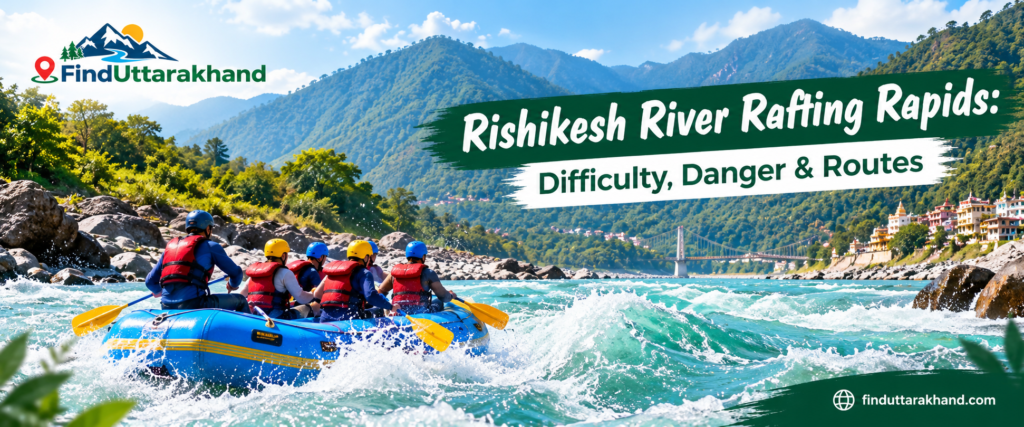
There is a moment during a Ganga rafting trip when smooth water turns into waves and the guide calls for coordinated paddling. These rapids are a major reason adventure travellers visit Rishikesh, Uttarakhand. However, not every route offers the same experience. Some stretches are shorter, while others include more demanding whitewater and require careful planning.
Understanding Rishikesh river rafting rapids, their difficulty levels and the routes where they occur can help visitors make informed decisions. This guide explains the main routes, well-known rapids, potential risks and practical safety considerations.
How Rapids Are Graded
Whitewater rapids are commonly classified from Grade I to Grade VI, ranging from relatively straightforward water to extremely difficult and potentially dangerous conditions. The grade indicates the technical challenge of the water, not a guarantee that a trip is safe or suitable for everyone.
River conditions can change with water levels, rainfall and other environmental factors. The same stretch may feel different under different conditions, and rapid classifications can vary between published sources. Grades should therefore be treated as guidance rather than a substitute for advice from a qualified rafting guide.
Rishikesh’s rafting region includes rapids of different difficulty levels. The longer Kaudiyala stretch includes more challenging sections and should not be treated as equivalent to shorter routes.
Main Rishikesh River Rafting Rapids
Several named rapids are associated with the rafting stretches between Kaudiyala, Shivpuri and Rishikesh. Their exact sequence and classification may vary between route descriptions, so confirm the planned route and current conditions with your operator.
The Wall
The Wall is one of the best-known challenging rapids on the longer Kaudiyala stretch. It is often highlighted in descriptions of this section because of its demanding whitewater. Discuss current river conditions and route suitability with the guide before booking.
Three Blind Mice
Three Blind Mice is another named rapid associated with the longer rafting stretches around Kaudiyala. It is frequently mentioned in descriptions of the region’s whitewater. The experience depends on water conditions and the route being operated on the day.
Crossfire
Crossfire is a named rapid associated with the Kaudiyala rafting stretch. Its difficulty can depend on river conditions, so visitors should follow their guide’s instructions instead of relying only on a published grade.
Initiation
Initiation is a well-known rapid included in descriptions of the Shivpuri-to-Rishikesh route. It forms part of the whitewater experience visitors may encounter on this stretch.
Roller Coaster
Roller Coaster is one of the recognised rapids on the Shivpuri route. It is commonly mentioned in rafting descriptions because of its wave-filled whitewater. Its intensity can change with river conditions.
Return to the Sender
Return to the Sender is another named rapid associated with rafting around Shivpuri. Confirm the expected rapid sequence with your operator because route descriptions and conditions may differ.
Double Trouble
Double Trouble is also named among the rapids encountered on the Shivpuri-to-Rishikesh stretch. Participants should listen carefully to the safety briefing and follow the guide’s instructions through the rapid.
Golf Course and Club House
Golf Course and Club House are two other well-known rapids associated with the Shivpuri route. They are frequently mentioned in descriptions of the region’s rafting experience. Their difficulty should not be treated as a fixed grade without reliable, route-specific confirmation.
Other names, including Daniel’s Dip and Black Money, also appear in rafting guides and operator descriptions. Because published lists and classifications can differ, confirm their route placement and current descriptions before treating them as part of a definitive list.
Rishikesh Rafting Difficulty Level by Route
The Rishikesh rafting difficulty level depends on the route, current river conditions and the experience required for the trip. Four commonly advertised starting points are Brahmpuri, Shivpuri, Marine Drive and Kaudiyala. Exact distances, operating conditions and trip durations should be confirmed with the operator.
1. Brahmpuri to Rishikesh
Brahmpuri is commonly presented as a shorter rafting option, with a frequently advertised distance of approximately 9 km. It may suit visitors looking for a shorter experience, subject to current operating rules and the operator’s assessment.
A shorter route does not mean there is no risk. Listen to the safety briefing and confirm eligibility requirements before participating.
2. Shivpuri to Rishikesh
The Shivpuri route is commonly described as approximately 16 km. It is associated with named rapids such as Initiation, Roller Coaster, Return to the Sender, Double Trouble, Golf Course and Club House.
This route offers a longer whitewater experience than the shortest stretch. First-time participants should discuss their comfort level and the current conditions with the operator rather than choosing solely on the route’s popularity.
3. Marine Drive to Rishikesh
Marine Drive is another commonly advertised starting point for a longer rafting trip. Published route distances and durations can vary, so confirm the actual distance and expected duration when booking.
Because the trip is longer, participants should consider their general fitness, ability to follow instructions and comfort with spending more time on the river. Ask the operator which rapids are expected on the planned stretch.
4. Kaudiyala to Rishikesh
Kaudiyala is associated with one of the longer and more demanding rafting stretches in the Rishikesh region. The route is commonly described as approximately 36 km, but its actual duration and availability depend on the operating conditions and trip arrangements.
This stretch includes challenging whitewater, with The Wall, Three Blind Mice and Crossfire among the names associated with the area. Do not select this route simply because it sounds more adventurous. Discuss current conditions, eligibility and the guide’s recommendation before making a decision.
Route details can change between operators and operating periods. Confirm the actual start point, end point, distance, duration and expected rapids before departure.
Is River Rafting in Rishikesh Dangerous?
It is a reasonable question, and an honest answer is important. River rafting is an adventure activity that carries real risks. The Ganga’s current, rocks, changing water levels and weather conditions can affect a trip. Participants may also fall out of a raft or struggle in the water.
It would be misleading to claim that serious accidents are rare without reliable accident statistics. Equally, it is not accurate to assume that every rafting trip is equally dangerous. Risk depends on river conditions, the route, equipment, guide competence and whether safety procedures are followed.
What Can Increase Risk?
- Changing water levels: Rainfall and other conditions can affect the strength and behaviour of rapids.
- Inadequate equipment: Poorly fitted or unsuitable safety equipment can increase risk.
- Insufficient preparation: Missing the safety briefing can leave participants unsure how to respond to instructions.
- Ignoring personal limits: Choose only a trip for which you meet the operator’s eligibility requirements.
- Alcohol: Never participate in rafting under the influence of alcohol or other intoxicating substances.
How to Make Your Trip Safer
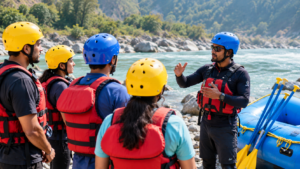
Choose an appropriately authorised operator and check its current status. Wear the provided life jacket and helmet correctly, pay attention to the complete safety briefing and follow the guide’s instructions throughout the trip.
Be honest about your swimming ability, fitness and relevant health concerns. Respect closures, weather warnings and instructions from the authorities.
Safety equipment and an experienced guide are important, but they cannot eliminate every risk.
Best Time for River Rafting in Rishikesh
The general rafting season in Rishikesh is commonly described as running from September to June. However, exact opening and closing dates for individual stretches can depend on inspections, river conditions and official decisions.
The monsoon can bring heavy rainfall and higher water levels, which can make rafting hazardous. Do not assume that every route opens on the same date or remains available throughout the general season.
Before travelling, check current official guidance and confirm with the operator that the intended stretch is permitted to operate on your chosen date.
Practical Tips Before Your Rafting Trip
Wear comfortable clothing that can get wet, and secure personal belongings before boarding. Ask the operator what equipment is supplied and whether additional clothing is advisable for the conditions.
Confirm the minimum age, eligibility rules, route distance, approximate duration and included services before paying. These details may differ between operators and routes.
Be honest about your swimming ability and comfort level. Do not choose a more demanding stretch just to impress others, and be prepared to postpone the trip if conditions are unsuitable.
Choosing the Right Rishikesh Rafting Route
Brahmpuri is commonly advertised as a shorter option, while Shivpuri offers a longer stretch with several well-known rapids. Marine Drive and Kaudiyala provide longer route options, with the Kaudiyala stretch including more demanding sections.
The right choice depends on the operating conditions, your eligibility and the guide’s assessment—not just the names or grades of individual rapids.
Rishikesh river rafting can be a memorable way to experience the Ganga and the landscapes of Uttarakhand. Research the route, choose an appropriately authorised operator and respect the river’s changing conditions before setting out.